



What is Marketing Automation Strategy and How It Works in 2026

Is your marketing team still sending follow-up emails by hand, moving leads one by one, and scheduling messages manually? That is not a workflow. That is a time trap.
A solid marketing automation strategy fixes this. It replaces every repetitive task with smart, trigger-based systems that run on their own, so your team stops doing busywork and starts driving real growth. In 2026, the businesses pulling ahead are not working harder. They have built systems that work for them, even while they sleep.
In this blog, you will learn exactly what a marketing automation strategy is, how it works step by step, which tools power it, and how to build one that actually delivers results.
Learn more about: What GoHighLevel Features Will Help You Grow Your Agency?
What is Marketing Automation Strategy?
A marketing automation strategy is a structured plan that uses software and technology to automate repetitive marketing tasks, like sending emails, posting on social media, scoring leads, routing contacts, and following up with prospects, all based on predefined rules, triggers, and customer behavior.
It’s not just about saving time. A well-built strategy means every lead gets the right message at the right moment, without a human needing to press “send” every single time.
Think of it as building a 24/7 sales and marketing machine that knows when a prospect visits your pricing page, fills out a form, opens an email, or goes quiet. Then it responds intelligently to each situation.
Why Marketing Automation Strategy Matters in 2026
The digital landscape in 2026 is noisier than ever. Customers interact with brands across email, SMS, social media, live chat, and more, often all at once. Without automation, keeping up is nearly impossible.
Here’s why having a clear marketing automation strategy is no longer optional:
Speed wins leads. Studies show businesses that respond to new leads within 5 minutes are up to 9x more likely to convert them. Manual follow-up simply can’t compete with instant automated responses.
Personalization drives revenue. Generic blasts get ignored. Automated workflows let you personalize every message based on user behavior, interests, and stage in the buying journey, without adding to your workload.
Your team’s time is too valuable. When marketers spend hours on data entry, follow-ups, and scheduling, they lose time that should go toward strategy and creativity. Automation frees that time back.
Consistency builds trust. A good marketing automation strategy ensures no lead slips through the cracks. Every contact gets nurtured, every pipeline stage gets triggered, every appointment gets confirmed. All automatically.
The Core Components of a Marketing Automation Strategy
Building a winning marketing automation strategy requires more than just buying a software tool. Here are the key pillars that hold it together:
1. Lead Capture and CRM Integration
Every automation strategy starts with getting leads into your system cleanly. This means building forms, landing pages, and entry points that automatically feed new contacts into your CRM, tagged, segmented, and ready for follow-up.
Without a clean data foundation, your entire automation stack runs on guesswork.
2. Lead Segmentation
Not all leads are the same. A cold prospect who just found your website needs a very different experience than a warm lead who already attended a webinar or downloaded your pricing guide.
Smart segmentation means grouping your contacts by behavior, source, stage, or interest, so your automated messages feel relevant, not robotic.
3. Automated Email and SMS Workflows
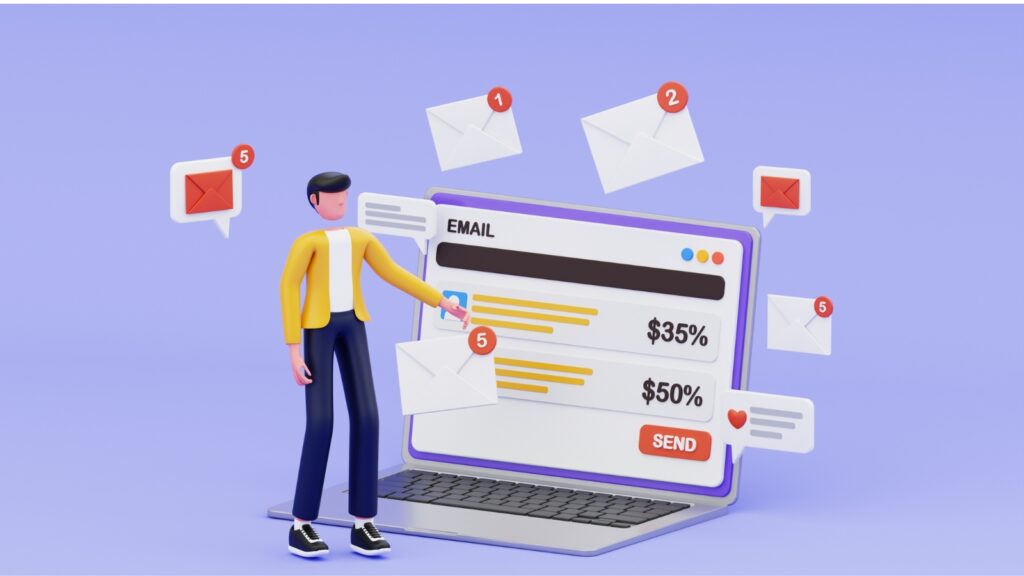
This is where digital marketing automation really shines. Triggered workflows send the right message based on what a contact does (or doesn’t do). Common examples include:
- Welcome sequences when someone signs up
- Follow-up nudges when a lead goes cold
- Appointment reminders via SMS
- Post-purchase review requests
- Re-engagement campaigns for inactive contacts
4. Lead Scoring
Not every lead deserves the same level of sales attention right now. Lead scoring assigns points to contacts based on their actions. For example, visiting a pricing page scores higher than reading a blog post.
When a lead hits a threshold score, your system can automatically notify a sales rep, send a high-intent follow-up, or even book a discovery call.
5. Marketing Workflow Optimization
Marketing workflow optimization is the ongoing process of reviewing, testing, and refining your automation sequences to improve performance. It’s not a set-it-and-forget-it exercise.
Great workflow optimization means analyzing open rates, click-through rates, conversion points, and drop-offs, then adjusting timing, messaging, and triggers based on real data.
6. Pipeline Management and Sales Handoff
Once a lead is ready to buy, your automation should seamlessly transition them into a sales pipeline, complete with task assignments, CRM updates, and sales rep alerts.
The gap between marketing and sales is where most revenue gets lost. Automation bridges it.
How Marketing Automation Works: Step by Step
Here’s a simple, real-world example of how a marketing automation strategy plays out from start to finish:
Step 1: A visitor lands on your website and fills out a contact form. Your system instantly captures their details, creates a CRM contact, and tags them based on which page they came from.
Step 2: An automated welcome message goes out within seconds. Email or SMS, or both, introducing your brand and setting expectations. No humans needed.
Step 3: A nurture sequence begins. Over the next 7-14 days, the contact receives a series of value-driven messages, including helpful tips, case studies, testimonials, and relevant offers, all based on their interests.
Step 4: Their behavior triggers scoring. They open three emails, click on a pricing page, and visit your booking link. Their score climbs. Your system flags them as a hot lead.
Step 5: Sales gets an alert and the contact gets a targeted CTA. A rep is notified. The prospect receives a personalized message with a calendar booking link. An appointment gets booked automatically.
Step 6: Post-sale automation kicks in. After the deal closes, automated messages handle onboarding, check-ins, review requests, and upsell offers.
This is a full-cycle marketing automation workflow running without manual input at every stage.
Top Marketing Automation Tools to Know in 2026
Choosing the right marketing automation tools depends on your business size, goals, and tech stack. Here’s a breakdown of the categories:
All-in-One Platforms: These combine CRM, email, SMS, pipeline, and automation into a single environment. Best for businesses that want simplicity and tight integration without managing ten different tools.
Email-Focused Tools: Platforms like Mailchimp or ActiveCampaign are strong for email-centric automation but often require add-ons or integrations to handle full-funnel workflows.
Enterprise Marketing Platforms: Tools like HubSpot, Marketo, and Salesforce Marketing Cloud are feature-rich but come with steep pricing and long learning curves, making them better suited for large teams with dedicated ops staff.
Workflow and Zapier-Style Connectors: Tools like Zapier or Make (formerly Integromat) help connect apps that don’t natively integrate, useful for patching gaps in a multi-tool stack.
The trend in 2026 is clear: businesses are moving away from fragmented tool stacks toward unified platforms that handle the entire customer journey in one place.
Common Marketing Automation Strategy Mistakes to Avoid

Even the best tools won’t save a poorly planned strategy. Watch out for these pitfalls:
Automating before you understand your audience. If you haven’t mapped out who your customers are and what they need at each stage, your automated messages will feel irrelevant, no matter how well the workflow is set up.
Over-automating too early. Start with one or two high-impact workflows, like a lead follow-up sequence or a re-engagement campaign, before building a 40-step automation maze.
Ignoring list health. Sending to unengaged, outdated, or unverified contacts kills your deliverability and wastes budget. Clean your list regularly.
No human touchpoint in the workflow. Automation should handle the routine, not replace all human connection. The best workflows know when to hand off to a real person.
Skipping analytics. If you’re not tracking open rates, conversion points, and drop-off stages, you’re flying blind. Set up reporting from day one.
Building Your Marketing Automation Strategy: A Simple Framework
Here’s a practical framework to get started without getting overwhelmed:
Define your goals first. Are you trying to convert more leads? Reduce churn? Increase repeat purchases? Your goal determines your workflows.
Map the customer journey. List out every touchpoint from first awareness to loyal customer. Identify where delays, manual tasks, or drop-offs happen.
Pick your starting workflows. Focus on the highest-impact, lowest-complexity automations first, usually a lead welcome sequence and a follow-up drip.
Choose a unified platform. Avoid managing separate tools for email, SMS, CRM, and calendar. The more your stack is connected, the smoother your automation runs.
Test, measure, and optimize. Launch your workflows, track results for 30–60 days, and refine based on real performance data.
The Future of Marketing Automation in 2026 and Beyond
In 2026, AI is no longer just a buzzword in marketing. It is being built directly into automation platforms. The most forward-looking businesses are using AI to:
- Predict lead intent before a prospect even fills out a form
- Personalize follow-up messages dynamically based on behavior patterns
- Route leads to the right sales rep based on historical performance data
- Generate follow-up content automatically based on conversation context
- Run AI voice agents that qualify leads over the phone without human staff
The businesses that treat automation as a strategic asset not just a time-saving tool are the ones building real competitive advantages.
Conclusion
A smart marketing automation strategy is not a luxury anymore. It is how businesses grow faster, follow up quicker, and get more done without burning out their teams. Every day you run on manual workflows is a day your competition pulls further ahead. The good news? You do not need a big team or a big budget to get started. You just need a clear plan, the right tools, and the decision to stop doing by hand what a system can do for you.
Know your audience. Map your customer journey. Build workflows that match how real people actually buy. The technology is ready and waiting. The only question left is simple: are you going to use it before your competition does, or after?
Ready to Automate Your Growth?
AutoLoopers helps businesses build smart automation systems that capture leads, manage pipelines, send follow-ups, and close more clients all from one connected platform. No more switching tabs, no more manual follow-ups, no more missed opportunities.
Visit AutoLoopers to see how we can build your automation system and start running your business on autopilot.
FAQ’s
Q1. What is a marketing automation strategy in simple terms?
A marketing automation strategy is a plan that uses software to automatically handle repetitive marketing tasks like sending follow-up emails, nurturing leads, and moving contacts through a sales pipeline based on triggers and rules you set in advance.
Q2. How is marketing automation different from email marketing?
Email marketing is one channel. Marketing automation is an entire system that spans email, SMS, CRM, lead scoring, pipeline management, and more all connected and triggered by customer behavior, not just a send schedule.
Q3. What are the best marketing automation tools for small businesses in 2026?
Small businesses benefit most from all-in-one platforms that combine CRM, email, SMS, and automation without requiring a large tech team. Look for tools that cover the full customer journey in one place rather than requiring multiple separate subscriptions.
Q4. How long does it take to see results from marketing automation?
Most businesses see measurable improvements faster lead response times, higher email open rates, more booked appointments within the first 30–60 days of implementing their first workflows. Larger results compound over 3–6 months as workflows are refined.
Q5. Do I need a big team to implement a marketing automation strategy?
No. In fact, marketing automation is especially valuable for small and mid-sized teams because it lets a lean team perform at the level of a much larger one. The right platform handles the heavy lifting so your team can stay focused on strategy and relationships.